This event is free and open to the public.
Abstract
This talk will introduce two-layer quadratic neural networks and cast its training as a convex optimization when regularization is not involved. It will be shown that the training can be done by solving a least squares problem without regularization or as a lower bound to the regularization problem. The main advantage of quadratic neural networks as opposed to other neural networks is the fact that they provide a smooth (quadratic) mapping between the input and the output of the network. This allows one to perform formal mathematical analysis of its performance and resilience. Another advantage is that the optimal number of neurons in the hidden layer is obtained directly from the training through a neural decomposition procedure. It will be shown that the training time using least squares is a small fraction of the time it takes to train other two-layer networks using backpropagation. Applications to sensor fusion, optimal control, and a vibration model of the bowing of a violin string will be presented.
Biography
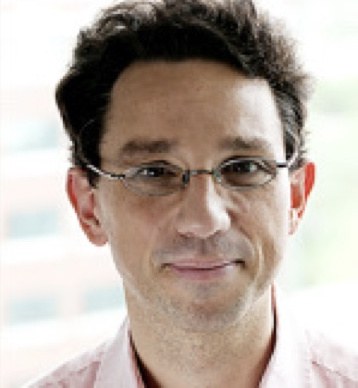
Professor Luis Rodrigues obtained a PhD in Aeronautics and Astronautics at Stanford University in 2002, and MASc and Bachelor degrees at the University of Lisbon in Electrical and Computer Engineering. He currently performs research on control systems and machine learning applied to aerospace and energy systems at Concordia University. He was Director of Education of the Concordia Aerospace Institute from 2018 to 2020. He has authored or co-authored 150 journal and conference publications, four aerospace opinion articles in the Hill Times, and is first author of the book "Piecewise Affine Control: Continuous Time, Sampled Data, and Networked Systems". His co-written publication "Trajectory Planning and control of a quadrotor choreography for real-time artist-in-the-loop performances", received the Unmanned Systems journal's best paper award in the 2018-2019 applications category. This work appeared in the TEDx talk “Drones, Art, and Music” delivered at Place des Arts, 2017.