
Reservations
This event is free and open to the public with reservation. Online ticket reservations for Constellations of Space can be made via this MS Form: https://forms.cloud.microsoft/r/tSmQwWd9Jp
For CIRMMT students wishing to have their attendance tracked for awards eligibility, please ensure to reserve your own seat.
We invite you to share this event via Facebook.
Program
Mélanie Frisoli: Les espaces imaginés (2026, World premiere)
Stereo acousmatic work, Duration: 4 interludes of 3' each
Les espaces imaginés consists of four acousmatic pieces that draw on the aesthetics of radio documentary. The project grew out of a reflection on research-creation undertaken as part of my PhD in Composition and Sound Creation at the Faculty of Music of the Université de Montréal. Brought together, these two terms may seem antithetical. One of my aims was therefore to symbolically reduce the distance marked by the hyphen that separates them, and to bring research and creation closer together in practice. I conducted eighteen interviews on the notion of space with artists, composers, and researchers from various fields (sociology, acoustics, geography, etc.). These interviews inform the theoretical dimension of my research, bringing together significant situated perspectives, while also constituting the sonic material of the pieces. The perspectives intersect, challenge, and contradict one another, giving rise to a plurality of ways of inhabiting, perceiving, and imagining space.
Riccardo Tesorini: Hyphae (2025, North Amerian Premiere)
Acousmatic work, Duration: 8'30
Author/Hub: Riccardo Tesorini
Contributors/Nodes: Daniele Carcassi, Andrea Laudante, Paolo Montella, Mattia Parisse, Jonatan Snapir, Sofia Zaiceva
Hyphae is one of the multiple outcomes generated within Ecosistemi Sonori, a collective compositional project exploring sympoietic creation grounded in interdependence and the cogeneration of sonic materials. Inspired by mycelial growth and modeled on L-systems, the project unfolds as an open network where materials circulate through cycles of exchange and rewriting.
Like an expanding subterranean organism, Hyphae arises from the intertwining of sonic gestures, exchanges, transformations, and mutual remodellings among several participants in the network, generating complex, unpredictable forms analogous to mycelium's rhizomatic behavior; sonic materials lose individual authorship and merge into a shared ecosystem.
Riccardo Tesorini, hub of the project, reorganizes contributions from the network (Daniele Carcassi, Andrea Laudante, Paolo Montella, Mattia Parisse, Jonatan Snapir, and Sofia Zaiceva). The sonic matter breathes, expands, and contracts, alternating tension and calm. Presences emerge from subtle textures, multiplying and dissolving over time, not as a finished object, but as a living organism.
Tarcísio Braga: Mirĩ: Spatial Ecologies of the Forest (2026, World premiere)
Multichannel fixed-media composition for spatialized flutes, percussion, and Amazonian field recordings, Duration: 14'
Sound spatialization: Filipe Cretton
Mirĩ: Spatial Ecologies of the Forest is based on recordings originally produced for an unreleased album by Mirĩ, a duo formed by Tarcísio Braga (percussion and drum kit) and Ricardo Berwanger de Sá (winds), whose collaborative musical practice is rooted in improvisation and ancestral Amazonian knowledge. The source material was recorded by sound engineer Alexandre Andrés and includes performances by Ricardo on the Indigenous flutes yapurutú, mawaco, and cotia, alongside Tarcísio’s recordings of a diverse array of Brazilian and world percussion instruments and drum kit. The composition also incorporates field recordings personally made by Tarcísio in the Brazilian Amazon.
The work aims to present the forest as a living entity that breathes and speaks through the timbres and resonances of these instruments. Music can act as an agent of socio-ecological transition, helping us rethink our lifestyles and relationships with the Earth, other cultures, and ourselves. Through the spatialization of sounds belonging to the forest landscape, which profoundly transformed my worldview, the work creates a shared acoustic environment that invites ecological empathy and seeks to raise public awareness of the urgent need to "keep the forest standing."
Nicola Giannini: Architecture éphémère (2023-2025)
Immersive fixed-media music. Duration: 11'
Architecture éphémère is a fixed-media work that seeks to create an immersive experience in which listeners can lose themselves in the space and time created by the music. The title refers to the idea that spatial music can generate an ephemeral, constantly evolving architecture that overlays the physical environment.
The work explores tensions between opposing spatial sensations—proximity and distance, intimacy and immensity—and the depth of field of the sonic space. Most of the materials are generated through synthesis to create sounds with different shapes, sizes, and densities. Architecture éphémère unfolds as a journey through distinct atmospheres, shifting from explosive, detailed passages, where trajectories can be pinpointed, to diffuse, hypnotic spaces that verge on disorientation.
The work was composed during the workshop series Composing Fixed-media Multichannel Music on a Hybrid Loudspeaker Array led by Pierre Alexandre Tremblay (2022–2023) at CIRMMT in Montreal, and reworked in 2025.
Pietro Freiburger: Debussy Revisited (2026, World premiere)
Date of the original piece Cloches à travers les feuilles: 1908
For piano, voice, and electronics, Duration: 9'
Performer(s): Pietro Freiburger (piano), Anne-Sophie Gagnon-Métellus (voice), Aurélie Théroux Sénécal (electronics), Zak Colello (electronics)
Debussy Revisited is a journey through the sonorous and timbral possibilities of the piano, in the name of the combination of tradition and innovation. Starting with Cloches à travers les feuilles, a work from the Images II series by the French composer Claude Debussy (1862-1918), the piece unfolds in a dynamic process of search for musical limits when the piano and the voice, fundamental to Debussy's aesthetics, meet electroacoustics, capable of integrating into an ecosystem to expand it towards new horizons. The creation thus takes place at the exact moment when these two entities collaborate to give light to a new form of sound expression, no longer linked to the rigor imposed by the score, but open to the borders of artistic contamination in its highest form. All this in the light of an evocative element that is very present in the French composer's original works, but here taken to a higher level of realization and meaning.
Biographies
Tarcísio Braga
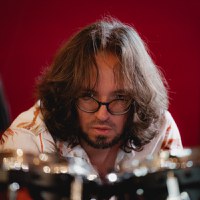 Tarcísio Braga (he/him) is a Brazilian drummer, percussionist, and improviser whose artistic approach is driven by cross-pollination between tradition, technology, and improvisation. Tarcísio is an Assistant Professor of Music at Amazonas State University (UEA) in Brazil, and is currently pursuing a Doctor of Music (DMus) in percussion at McGill University’s Schulich School of Music. Tarcísio’s research-creation practice investigates the snare drum and drum kit as hybrid instruments, integrating acoustic performance, live electronics, and rhythmic traditions from Brazil. Across his creative practice, he explores timbre, live looping, spatialization, and real-time processing. Tarcísio’s work often incorporates his own field recordings, particularly from the Amazon rainforest, processed into immersive sonic environments in multichannel formats.
Photo credit/Crédit photo: Lucca Mezzacappa
Filipe Cretton
 Filipe Cretton (he/him) is a Brazilian sound designer, sound engineer, and educator based in Montreal. A graduate in Music Education from UNIRIO, he is Faculty in Sound Design at the Theatre Department of John Abbott College. Filipe's research-creation practice investigates spatialized sound as compositional material for live performance, integrating binaural mixing, gesture-based control, and real-time audio processing, drawing on research developed at UNICAMP and McGill University. Working at the intersection of theatre, live music, and technological mediation, he explores immersive listening and sensor-driven interaction. This practice is grounded in over a decade of large-scale production, as head of sound (A1) for musical theatre productions in Brazil — among them Dear Evan Hansen, Beetlejuice, The Color Purple, and The Sound of Music — and in the technical direction of the FIFA World Cup 2026 pre-match ceremonies in Toronto. His approach is driven by the dialogue between craft, technology, and teaching.
Pietro Freiburger
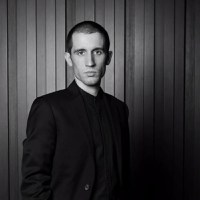 Italian pianist Pietro Freiburger enjoys a diverse career in music. Mr. Freiburger regularly performs in halls and festivals in Italy, Serbia, Spain, Canada and the United States and won prizes in international competitions in Europe and North America. He is also the recipient of various scholarships and awards from the University of Montreal, the Jewish Foundation of Montreal and the Grand Order of the Sons and Daughters of Italy of Montreal. A specialist of the solo piano music of the Finnish composer Einojuhani Rautavaara, Mr. Freiburger has presented his research-creation projects at various North American and European universities. He is also a music critic specializing in keyboard music for La Scena Musicale and PANM360. A graduate of Turin Conservatory, Mr. Freiburger is currently attending a doctorate in piano interpretation at the University of Montreal.
Anne-Sophie Gagnon-Métellus
 Soprano from Quebec, Anne-Sophie Gagnon-Métellus is distinguished by the clarity of her timbre, her refined musicality and a committed stage presence. She is currently pursuing a master's degree in voice at the Université de Montréal, in the class of Ariane Girard. On stage, she recently performed Gretel in Humperdinck's Hansel und Gretel at the Croatian Opera Academy, as well as Eurydice in Offenbach's Orpheus in the Underworld at Salle Claude-Champagne. She also performs as a soloist in concert with various ensembles, including Les Violons du Roy, Alea Musique and the Chambristes du Grand Montréal. Her career was rewarded with a second prize in vocal performance at the Classival competition (2024) and the Abbé Charles-Émile-Gadbois scholarship from the Université de Montréal (2025). She continues her professional development at various institutions, including the Domaine Forget in Charlevoix and the Caledonia Opera House in Scotland.
Aurélie Théroux Sénécal
 Aurélie Théroux Sénécal has been developing a practice in electroacoustics where she asserts a singular artistic signature between tension, raw material and social commitment. Her work explores the contrasts between saturation, fragility and power, always leaving room for an assumed sensitivity. She has been invited as a no-input mixing board performer in the 2025-2026 programming of Code d'accès, highlighting the growing recognition of her approach within the current and experimental music community. At the same time, she pursues a creative work marked by memory, filiation and the voice as a vector of identity. Her piece Voix héréditaires, composed at the Université de Montréal, will have its international premiere in May 2026 in Naples, Italy. Between sound radicality and human depth, Aurélie Théroux Sénécal has established herself as an emerging artist with a strong voice and resolutely current in the Quebec electroacoustic landscape.
Zak Colello
 Zak Colello (he/him) completed his bachelor's degree in digital music at the University of Montreal, followed by a position as lead audio in the Satosphère at the Société des Arts Technologiques in Montreal. He is currently pursuing a master’s degree in composition and Sound Creation, and holds the position of research assistant for the Groupe de Recherche en Immersion Spatiale (GRIS) as well as student coordinator for Research Axis 4 at CIRMMT. Under the name Sanat Drones, Zak explores sound performances with a focus on deep listening, or as he calls it, attentive listening. Zak is also technical director for experimental music and media arts events (Timbre 2026, Festival Formes·Ondes, Orée). He composes electroacoustic music with a focus on ecologies, unique narratives, and immersion, such as Sarah Good (2025) and I Am Sitting in a [B325_remix_short] (2026). Occasionally, he designs interactive installations, such as Morial Mort (2026).
Mélanie Frisoli
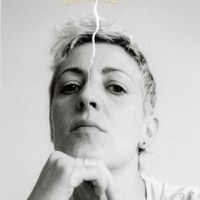 Mélanie Frisoli is a Franco-Canadian composer, sound artist, and audio engineer. For fifteen years, she performed and sang her own songs on stages in France and internationally, giving approximately 700 concerts. She has released six albums, written three books, and composed music for dance, theatre, and film. Passionate about studio work, she trained as an audio engineer before pursuing studies in Digital Music at the Faculty of Music of the Université de Montréal. After completing a master’s degree specializing in sound spatialization, she is currently completing a PhD in Composition and Sound Creation under the supervision of Dominic Thibault and Caroline Traube. Her acousmatic and experimental works have received several awards and have been performed in Canada, Italy, Germany, and the United States.
Photo credit/Crédit photo: Lawrence Fafard
Nicola Giannini
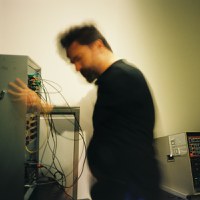 Nicola Giannini is an artist, researcher, and educator whose research-creation approach lies at the intersection of electronic and experimental music and sound art. His interests include spatialization, immersion, collaborative practices, and creation in public space. His works have been presented in North and South America, Australia, Asia, and Europe. He is currently undertaking an FRQ-funded postdoctoral fellowship at UQAM and within the Sounds in the City research partnership at McGill University. He holds a doctorate in composition from the Université de Montréal, where he is now a visiting professor in the Department of Digital Music. He actively contributes to the development of the SpatGRIS spatialization system within the Groupe de recherche en immersion spatiale.
Photo credit / Crédit photo: Emanuele Porcinai
Riccardo Tesorini
 Riccardo Tesorini (1991, Italy) is an Italian composer, sound designer, and multimedia artist living and working in Bologna, Italy. He graduated from the F. Morlacchi Conservatory in Perugia in Electronic Music and New Technologies. After a mobility period at the Sibelius Academy in Helsinki, he completed a Master’s degree in Sound Design at the G.B. Martini Conservatory in Bologna. He works across electroacoustic composition, audiovisual productions, sound installations, live performances, and projects for theatre and cinema. Stylistically, his work is characterized by an introspective vision combined with a constant inspiration drawn from nature, which he perceives as an essential condition for harmony. His compositions and performances have been presented internationally at venues and festivals including Ars Electronica (Linz), Wesa Festival (Seoul), NYCMF (New York), ICMC (Boston), SMC (Graz), IN-SONORA (Madrid), Spatial Audio Week (Helsinki), Tempo Reale (Florence), MA/IN (Italy), among many others.
Photo credit / Crédit photo: Chiara Vitofrancesco
Daniele Carcassi
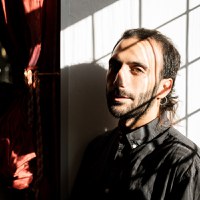 Daniele Carcassi (Abo Abo) is a sound artist, experimental performer, DJ, and producer whose work blends techno, electroacoustic textures, and immersive sci-fi soundscapes. Since 2015, he has created performances and sound installations using modular synthesizers, vintage vinyl, and custom multichannel systems, presented across clubs, theatres, free parties, and international festivals in Europe and Asia. He is co-founder of the label, collective, and party series DE RIO, and collaborates with Sinestesie, Fango Radio, and Minus on research-driven and experimental music projects. His work received an Honorary Mention at Ars Electronica 2025, and he has collaborated with IRCAM, La Biennale di Venezia, and Tempo Reale. His discography includes EPs, albums, compilations, and vinyl releases on multiple labels. He holds a Master’s degree in Sound Design and a Bachelor’s degree in Electronic Music, and teaches at the Conservatorio di Bologna and Polimoda in Florence.
Photo credit / Crédit photo: Phlame
Andrea Laudante
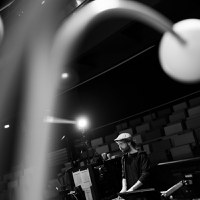 Andrea Laudante (Napoli/IT,1993) His aesthetic is influenced by the study and practice of oriental spiritual traditions. His formal studies include a BA in composition with a thesis on the influence of Yoga in the music of Giacinto Scelsi, and a MA in electroacoustic music under the supervision of Elio Martusciello at the Conservatory of Napoli. His works have been performed across all Europe, Canada, Australia, South America, Taiwan, China and Hong Kong in festivals as Akousma - INA GRM & Forum Workshop - IRCAM (Paris), Totem Èlectrique (Montréal), Futura (Crest), ICMC XXIII (Shenzen), Atemporanea (BsAs), SiMN (Curitiba), Sonic Matter (Zurich), CIM XXIII (Ancona), In-sonora (Madrid), Martini Elettrico (Bologna), Jihlava IDFF (CZ), This Human World (Vienna) and broadcasted on Rai Radio 3, Radio France, Radio WDR3. 1st prize of INA GRM Découvertes 2021 & Totem Electroacoustic 2023, mentions at Prix CIME 2023, “Teresa Rampazzi” prime at XXIVCIM 2024 with Totaleee collective.
Photo credit / Crédit photo: Didier Allard
Paolo Montella
 Paolo Montella studied piano and composition while deepening his knowledge of C-based programming languages. He studied electronic music at the San Pietro a Majella Conservatory under M° Elio Martusciello. He is pursuing a PhD in Performing Arts at the Accademia di Belle Arti of Naples. Since 2016, as a resident of Ex Asilo Filangieri in Naples, he has curated “Geografie del Suono: incontri con musicisti in transito”, which has hosted >70 events featuring renowned artists from around the world. Concerts across Europe, as well as in Egypt, Argentina, Brazil, Australia, Taiwan, Ecuador, China, and Hong Kong. His works have been featured at Ars Electronica, Forum Wallis (Münster-Goms), IRCAM Forum (Paris), WOCMAT (Taipei), Sonorities Festival (Belfast), Atemporanea (BsAs), SiMN (Curitiba), ICMC (Shenzhen), MusLab (Guayaquil), and ACMC (Sydney). He has collaborated with internationally renowned artists such as Toshimaru Nakamura, Elio Martusciello, Jean-François Laporte, Ingar Zach, Cedrik Fermont, Huda Asfour and Kjell Bjørgeengen.
Mattia Parisse
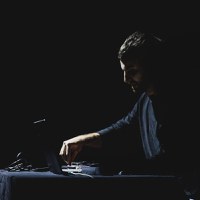 Mattia Parisse (1998) is a composer and researcher working in electroacoustic music, interactive sound installations, and augmented musical instruments. He studied Electronic Music at the Conservatory of Perugia and currently teaches Computer Music at the G. Rossini Conservatory in Pesaro. Selected by La Biennale di Venezia for Biennale College Musica 2024, he has received the XVI Premio Nazionale delle Arti, the Teresa Rampazzi Prize at the XXIII CIM, and the Premio Rotonda of the City of Livorno. His works have been presented at international conferences including ICMC, SMC, xCoAx, Sonic Cartography, and Harvard University’s Department of Music. His music has been performed at festivals and events including CUVO Festival (Madrid), ArteScienza (Rome), Festival AiMaako (Chile), IDKF (Stuttgart), Simultan Festival (Romania), Ecos Urbanos (Mexico City), ICMC (Limerick), and Supersonique Festival (Marseille). He has collaborated with composers, performers, and ensembles including Thierry Coduys, Stefano Gervasoni, Giulia Lorusso, and Opificio Sonoro.
Jonatan Snapir
 Jonatan Snapir is a Helsinki-based multidisciplinary artist whose work spans electronic, experimental, and popular music, as well as video and sound art. He has extensive experience in both studio and live environments, having worked as a producer, composer, instrumentalist, and engineer with artists such as Grande Mahogany, Louie Blue, Haloo Helsinki, Behm, and Isaac Sene. Snapir has released three albums and several shorter works under his own name on the labels Booa Music and Flame Jazz Records. He performs actively both with his own music and as a member of other artists’ live groups. Snapir is currently studying music technology and electroacoustic music at the Sibelius Academy, where his studies focus on analogue and digital synthesis, programming, and electronic improvisation. He has created installations and sound works for organizations such as Svenska Kulturfonden, ENCATC, and the University of Helsinki. His current passions include creative coding, experimental electronics, and modular synthesis.
Sofia Zaiceva
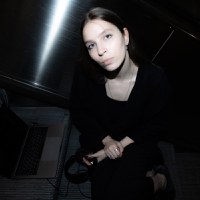 Sofia Zaiceva is a Latvian sound artist, composer, and performer whose practice spans electroacoustic composition, live coding, DJ culture, and experimental electronic music. Her work combines creative coding, spatial sound design, and improvisation, exploring the relational qualities of sonic environments and the ways digital processes can articulate human experiences. She holds a Master’s degree in Music Technology from the Sibelius Academy, Finland, where her artistic research focused on live spatial audio performance in SuperCollider. She also holds degrees in Classical Piano from the Jāzeps Vītols Latvian Academy of Music and Electroacoustic Composition from the Estonian Academy of Music and Theatre. An alumna of the SHAPE+ platform (2024– 2025), she has performed across Europe at Musikprotokoll (Austria), MeetFactory (Czech Republic), Panke Culture (Germany), and ZiMMT (Leipzig), among others. Her recent releases include CATPURSE’s SHE HAS CANDY (SØVN Records, 2025) and the solo albums hypergloss (Superpang, 2025) and aze (Riforma, 2024).
Photo credit / Crédit photo: Aino