This Distinguished Lecture will take place as part of the 4th International Conference on Timbre, at the Faculté de musique, Université de Montréal from July 2–4, 2026.
Abstract
In this keynote presentation, I will share reflections on historical beliefs and contradictions that may explain why our current understanding of hearing is only a part of the truth. These reflections will be illustrated through both ancient and recent work on auditory modeling. I will further describe a methodology developed with my colleagues over the past 20 years that combines digital synthesis with experimental psychology.
This approach, often referred to as perceptual engineering, has allowed us to identify perceptually relevant sound morphologies that not only help us better understand how we perceive our environment, but also enable intuitive sound control using verbal labels that reference sources and actions evoked by the sounds we perceive.
In recent years, we have extended this framework to explore multimodal perception and immersive environments. I will present examples of findings from these experiments and describe how we are currently preparing an immersive platform for further investigations.
Biography
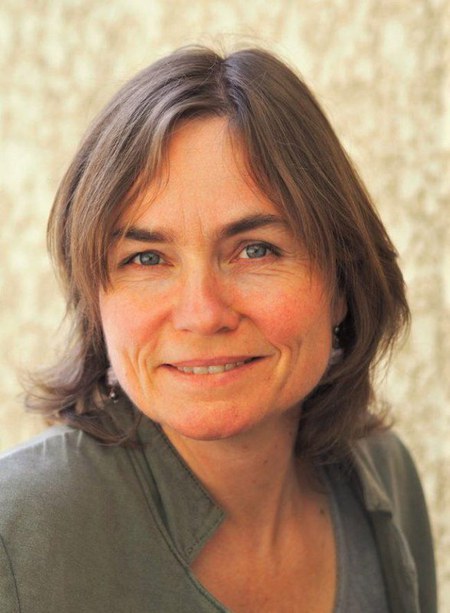
Sølvi Ystad obtained her degree as an electronic engineer from the Norwegian Institute of Technology - NTH (Norges Tekniske Høgskole), Trondheim, Norway in 1992 and her doctorate in acoustics from the University of Aix-Marseille II, France, in 1998. After a postdoctoral stay at the Center for Computer Research in Music and Acoustics (CCRMA), Stanford University, California, she obtained a research position at the Centre National de la Recherche Scientifique (CNRS) in 2002. In 2017 she co-founded the interdisciplinary laboratory PRISM - Perception, Representations, Image, Sound, Music (www.prism.cnrs.fr), of which she has been the director since January 2024. Her research activities focus mainly on auditory and multimodal perception, which she investigates by combining numerical modelling and experimental psychology.