Description
This fall event is envisioned as a moment of collective sharing and new perspectives for the entire CIRMMT community. The welcome session will open with brief presentations by two recently appointed Regular Members, who will share their research and its connection to the Centre’s mission. Following this, the Associate Directors will introduce the various programs available to all members, including the concert series, the Distinguished Lectures, upcoming events, funding opportunities, laboratory access, and other resources of interest. A delegation of professors and students from the Université de Sherbrooke will also be present on this occasion.
We invite you to share this event on Facebook when it becomes available.
Registration
This event is open to the whole CIRMMT community with registration: All Together Now 2026 — Autumn Gathering of the CIRMMT Community – Fill out form
Registration deadline: November 4, 2026, 11:00am
Program
- 16:30–17:00 — New member presentations with brief Q&A:
- 16:30 — Erin Gee
- 16:45 — David Brackett
- 17:00–17:20pm —Welcome for new members, presentation of the concerts program, lectures and events, usage of labs, and funding opportunities
- with Associate Directors Andrea Gozzi (UdeS) and Rachel Bouserhal (ETS)
- 17:20–18:50 — Reception & facilities tour for UdeS guests
- 19:00–20:00 — CIRMMT Weclomes: Akousma concert in the Multimedia room MMR
Abstracts & biographies
Erin Gee
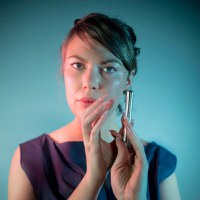
Erin Gee is a Canadian artist, composer, and Assistant Professor at the Faculty of Music of the Université de Montréal. Her work explores relationships between voice, emotion, technology, and embodiment through music, performance, and interactive systems. She is known for developing biofeedback instruments that transform physiological signals into sound in robotics, interactive VR, networked performance, and live musical ensemble performance. Her paper The BioSynth—An Affective Biofeedback Device Inspired by Feminist Thought received the Best Paper Award at the 2023 International Conference on New Interfaces for Musical Expression (NIME). Her artistic work has been presented internationally in venues such as Ars Electronica, MUTEK (Montreal/Argentina), ISEA 2022 Barcelona, and the Toronto Biennial.
Abstract: The Signal poetics of biofeedback music: Between experience and signal
Drawing on histories and technologies of biofeedback music as visited through feminist science and technology studies (STS) and my own artistic practice, I present Jonathan Sterne and Tara Rodgers’ notion of the poetics of signal processing as a useful model for thinking through what happens when living bodies, emotions, and social relations enter into the signal chain of electronic music.
Extending this research towards the idea of biofeedback music not as a set of technologies and quantification techniques, but rather as as a listening posture, I will also discuss my current research on functional music and sonic wellness in Canada. I will share some of the methodological challenges encountered in developing a scoping-review protocol for this emerging and diverse field, considering how research methods themselves participate in defining what counts as music, technology, wellness, and experience.
David Brackett
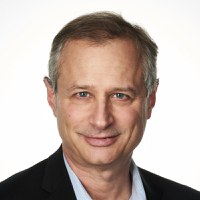
David Brackett is Professor of Music History and Musicology at the Schulich School of Music of McGill University, and Canada Research Chair in Popular Music Studies. His publications include Interpreting Popular Music (2000), The Pop, Rock, and Soul Reader: Histories and Debates, 4th ed. (2020), and Categorizing Sound: Genre in Twentieth-Century Popular Music (2016), winner of the Society for American Music’s Lowens Book Award.
Abstract: Creative collaboration in the recording studio
The presentation will center on a discussion of using recording studio sessions to study creativity as a collaborative, but often complex and subtle practice. Based on the research of an interdisciplinary team of recording engineers/producers and musicologists, this project seeks to understand how the interactions of musicians, engineers, recording technology, and musical instruments shape a finished recording. Statements by participant-observers and the analysis of video footage from recording sessions will provide the starting point for our analysis. In addition to first-hand recollections by members of our team, we interviewed musicians who participated in the sessions. Recollections and interviews will be aided by the study of video-recorded excerpts from the sessions. The presentation will focus on both musical interactions, interactions with technology, and on the interpersonal dynamics that affect the flow of various contributions and ideas during the recording process.