Honorary Lifetime Members
HOW TO NOMINATE SOMEONE FOR LIFETIME MEMBERSHIP
Recipients
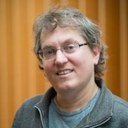 Sidney Fels, UBC, Canada
Lifetime member as of 2026.
Sidney Fel's COBS Keynote video from 2025
Biography: Sid Fels has been a Professor in the Department of Electrical and Computer Engineering at UBC since 1998. Dr. Fels received his PhD and MSc in computer science at the University of Toronto in 1994 and 1990 respectively and his BASc in electrical engineering at the University of Waterloo in 1988. He was recognized as a Distinguished University Scholar at UBC in 2004. He was a visiting researcher at ATR Media Integration & Communications Research Laboratories in Kyoto, Japan from 1996 to 1997.
Dr. Fels previously worked at Virtual Technologies Inc. in Palo Alto, CA. He is internationally known for his work in human-computer interaction, 3D displays, biomechanical modeling, neural networks, intelligent agents, new interfaces for musical expression and interactive arts. His lab website is at hct.ece.ubc.ca. Dr. Fels was also the director of the Media and Graphics Interdisciplinary Centre (MAGIC) at UBC from 2001 to 2012.
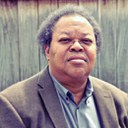 George E. Lewis, Columbia University, USA
Lifetime member as of 2026.
Biography: George Lewis is an American composer, musicologist, and trombonist, and the Edwin H. Case Professor of American Music and Area Chair in Composition at Columbia University. He has served as Artistic Director of the International Contemporary Ensemble and was a Fellow of the Wissenschaftskolleg zu Berlin (2020–21). Lewis is a Fellow of the American Academy of Arts and Sciences and the American Academy of Arts and Letters, a Corresponding Fellow of the British Academy, a member of the Akademie der Künste Berlin, and an Honorary Member of the American Musicological Society. His honors include the Doris Duke Artist Award (2019), a MacArthur Fellowship (2002), and a Guggenheim Fellowship (2015). A member of the AACM since 1971, Lewis is widely regarded as a pioneer of computer music systems that improvise with human performers. His scholarship addresses experimental music, improvisation, technology, and decolonization. His book A Power Stronger Than Itself (2008) received major national awards, and he has co-edited several influential volumes on contemporary and improvised music.
"George E. Lewis," n.d., in Wikipedia, https://en.wikipedia.org/wiki/George_E._Lewis
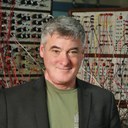 Joseph A. Paradiso, MIT Media Lab, USA
Lifetime member as of 2026.
Biography: Joseph Paradiso is the Alexander W. Dreyfoos (1954) Professor of Media Arts and Sciences at the MIT Media Lab, where he directs the Responsive Environments group and serves as the Media Lab’s Academic Head. He received his PhD in Physics from MIT in 1981 as a K.T. Compton Fellow and received his BS in electrical engineering and physics summa cum laude from Tufts University in 1977. He joined the Media Lab in 1994 after developing spacecraft control and sensor systems at Draper Laboratory and high-energy physics detectors at CERN Geneva and ETH Zurich. He is a pioneer in the development of the Internet of Things and renowned for work in wearable sensing, energy harvesting technology, and electronic music systems and controllers. His current research explores how sensor networks and AI augment and mediate human experience, interaction and perception. This has encompassed wireless sensing systems, wearable and body sensor networks, ubiquitous/pervasive computing and the Internet of Things, human-computer interfaces, space-based systems, sensate materials, digital twins in virtual worlds, and interactive music/media. He has written over 400 articles and papers and holds circa 30 US patents in these areas. Joe has also been designing, building, and using his own electronic music synthesizers since the early 1970s, amassing one of the world’s most unique and extensive custom modular systems, which has been featured in installations worldwide. He has always enjoyed composing electronic soundscapes, and seeking out edgy and unusual music from across the world. He is a Life Fellow of the IEEE and a Senior Member of the AIAA.
Webpage on MIT Media Lab website
"Joseph A. Paradiso," n.d., in Wikipedia, https://en.wikipedia.org/wiki/Joseph_A._Paradiso
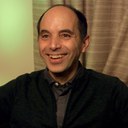 Marc-Pierre Verge, Applied Acoustics Systems, Canada
Lifetime member as of 2026.
Biography: Marc-Pierre Verge co-founded Applied Acoustics Systems and is actively involved in the research and development of wind instrument synthesis modules. His expertise lies in acoustics and aero-acoustics research, as well as physical modeling for sound synthesis. Prior to founding Applied Acoustics Systems, Verge was a researcher for the CNRS (Centre National de la Recherche Scientifique), in France, and worked in the acoustics laboratory of the Université de Paris VI. He holds the position of vice editor-in-chief of Acta Acustica, the scientific journal of the European Acoustical Association (EAA). Verge holds a doctorate degree in aero-acoustics from the University of Eindhoven, in the Netherlands, in collaboration with IRCAM (Institut de Recherche et Coordination Acoustique et Musique), in Paris, a master of science degree in optics from the Université Laval, in Québec, a master of science in acoustics from Université du Maine, in Le Mans, France, and a bachelor of science in engineering physics from the Université Laval, in Québec. In addition to his scientific experience, Verge has studied music for many years and played the flute in different classical ensembles.
Webpage on Applied Acoustics Systems website
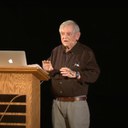 Joel Chadabe (1938-2021), NYU Steinhardt, USA
Lifetime member as of 2019.
Joel Chadabe's Distinguished Lecture video from 2019
Biography: An American composer and author. He is internationally recognized as a pioneer in the development of interactive music.
Joel graduated from the University of North Carolina at Chapel Hill in 1959 with a degree in music, despite his parents' desire for him to become a lawyer. Chadabe then continued his education at Yale University under Elliott Carter, graduating in 1962 with a master's degree in music.
Upon completing his education at Yale, Chadabe and Carter traveled to Rome, where they continued their professional relationship. Chadabe was interested in studying jazz and opera, but ultimately accepted an offer from the State University of New York at Albany to direct its electronic music studio in 1965. He and Robert Moog designed the CEMS (Coordinated Electronic Music System), a Moog modular "super synthesizer" housed at the electronic music studios at Albany which incorporated an early digital sequencer, and he later acquired a Synclavier digital synthesizer for the university.
He was the president of Intelligent Music from 1983 to 1994, and founded the Electronic Music Foundation in 1994. Chadabe was the curator at New York sound gallery Engine 27 in 2000–01. He was given a SEAMUS Lifetime Achievement Award in 2007.
After retiring from his position at Albany in the late 1990s, Chadabe continued teaching as an adjunct at the Manhattan School of Music, New York University, and Bennington College.
His students include Liz Phillips, Richard Lainhart, and David A. Jaffe.
"Joel Cahadabe," n.d., in Wikipedia, https://en.wikipedia.org/wiki/Joel_Chadabe
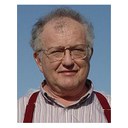 Albert Bregman (1936-2023), Department of Psychology, McGill University
Lifetime member as of 2008.
Albert Bregman was invited to give the Keynote lecture at the 2008 CIRMMT General Assembly. His lecture, and sound files, can be downloaded.
Biography: A Canadian academic and researcher in experimental psychology, cognitive science, and Gestalt psychology, primarily in the perceptual organization of sound.
Bregman received a Bachelor of Arts degree from University College of the University of Toronto, with a concentration in Philosophy (ethics), in 1957. He received a master's degree in Psychology, also from the University of Toronto, in 1959. In 1963, he received a PhD degree from Yale University.
Bregman was known for having defined and conceptually organized the field of auditory scene analysis (ASA) in his 1990 book, Auditory Scene Analysis: the perceptual Organization of Sound (MIT Press). His ideas about ASA have provided a new framework for research in the auditory systems of both humans and non-human animals, for behavioural and neurological studies of speech perception, for music theory, hearing aids, audio technology, and the separation of speech from other sounds by computers (CASA). In acknowledgement of these contributions, he was called "the father of auditory scene analysis".
Until his death, Bregman held a post-retirement appointment at the rank of emeritus professor in the Department of Psychology at McGill University. Arriving at McGill in 1965, he became the first professor there to teach cognitive psychology. He also taught courses on Computer and Man, Research methods in experimental psychology, Learning Theory, Auditory Perception, Psychological Theory, and honors research seminars.
Many of Bregman's McGill undergraduate students have gone on to make significant contributions to intellectual life.
"Albert Bregman," n.d., in Wikipedia, https://en.wikipedia.org/wiki/Albert_Bregman