
SIMSSA
Return to the Projects main page
Summary
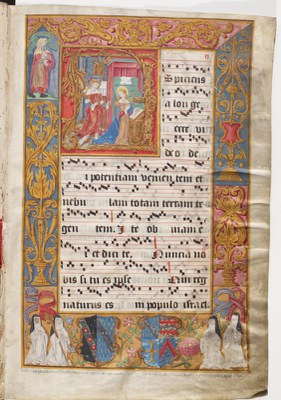
The Single Interface for Music Score Searching and Analysis project (SIMSSA) is teaching computers to recognize the musical symbols in digital images of musical scores, linking materials from the shelves of libraries and museums from around the world in a single digital forum.
Objectives
The goal is a single web interface that combines OMR conversion, search, and analysis tools, and include the:
- Creation of a 21st-century architecture for processing music documents
- Transformation of symbolic representations into searchable data
- Search and analysis tools for large digital music collections
- Public access to musical data that can be studied, analyzed, and performed
For the first time, it will be possible to search and analyze images of musical scores online, dramatically increasing the accessibility and usefulness of digital collections and enabling anyone to conduct powerful searches and do large-scale, data-driven analysis.
Timeline
2011-2024
Status: While the thirteen-year research partnership grant ended, the project is still ongoing.
Context
Music prints and manuscripts created over the past thousand years sit on the shelves of libraries and museums around the globe. As these organizations digitize their collections, images of these scores are increasingly accessible online. However, the musical content remains difficult to search.
Google Books and HathiTrust have already made it possible to search the content of text documents through Optical Character Recognition (OCR), which transforms digital images of texts into a symbolic representation that can be searched by computers. For digital images of musical scores, the analogous technology is Optical Music Recognition (OMR).
SIMSSA works to improve OMR technology so that computers can recognize the musical symbols in these images, enabling us to convert digital images of musical scores into symbolic representations of music. We can then search and analyze these symbolic representations, using software that is being developing concurrently.
Approach
The research is organized along two axes: content and analysis.
- The content axis creates document processing and OMR systems for digital images, transforming them into searchable symbolic notation. Check out the Cantus Ultimus project to see current OMR work in action on chant manuscripts from the CANTUS database at the University of Waterloo.
- The analysis axis develops tools and techniques for large-scale search and analysis of music in symbolic notation. Take a look at the ELVIS Project to access the growing database of music in symbolic notation and explore some of the software development on GitHub.
Outcomes & Impact
- Key outcomes include a large number of datasets and Corpora, including Bach Chorales Figure Bass dataset, Dodecachordon dataset, Madrigal Project, and The String Quartets by Felix Mendelssohn.
- Institutions who are using and implementing the technology developed by the SIMSSA team are:
- Boston College
- Duke University Libraries
- Omas@MITH
- Continuo@MITH
- Projects that the SIMSSA project has contributed to include:
- Measuring Polyphony
- Verovio
- music21
- Django REST Framework
- Serpy
- d3.js
People Involved
Principal Investigator
- Ichiro Fujinaga, McGill University*
Co-Investigators
- Jennifer Bain, Dalhousie University
- Julie Cumming, McGill University*
- Katherine Helsen, University of Western Ontario
- Debra Lacoste, University of Waterloo
- Audrey Laplante, Université de Montréal*
- Cynthia Leive, McGill University Marvin Duchow Music Library
- Cory McKay, Marianopolis College*
- Lauren Pugin, Répertoire International des Sources Musicales (Switzerland)
- Jesse Rodin, Stanford University
- Réne Rusch, University of Michigan*
- Peter Schubert, McGill University*
- George Tzanetakis, University of Victoria
- Jonathan Wild, McGill University*
*CIRMMT regular and collaborator members
SIMSSA includes music scholars, performers, librarians, and music technologists, working to create new tools for the search and analysis of the collections of our partner museums, research libraries, and universities. Document processing and OMR correction for this vast collection is carried out by musicians, students, and scholars around the world. A full list of all participants is available on the SIMSSA website.
Partners
Academic Partners |
Other Partners |
| McGill University & Schulich School of Music | Alexander Street Press |
| CIRMMT | Bavarian State Library |
| Dalhousie University | Bibliothèque Nationale de France |
| Goldsmiths, University of London | Bodleian Libraries |
| Harvard University Music Library | British Library |
| The Juilliard School | Compute Canada / Calcul Québec |
| Université de Montréal | DIAMM Centre for Studies in Early Music |
| University of Pennsylvania, Libraries | Hathi Trust Research Center |
| University of Victoria | New York Philharmonic Archives |
| University of Virginia | RISM Switzerland |
| University of Washington | Repertoire International de Literature Musicale (RILM) |
| University of Waterloo | The Walters Art Museum |
Granting Agencies / Funding Sponsors
- Social Sciences and Humanities Research Council of Canada (SSHRC)
- Fonds de recherche du Québec (FRQ)
- Digital Research Alliance of Canada
- Calcul Québec
Resources
- Media resources include podcasts and interviews.
- Presentations between 2011-2024 were presented around the world.
- Publications have been made in a large number of journals and other media.
Keywords
Network, Optical music recognition (OMR), Music digitization and accessibility, Digital music score, Music corpora
Opportunities for Engagement
- Workshops have been held regular over the period of the project: https://simssa.ca/activities/workshops/
- SIMSSA has various opportunities to be involved, including hiring for different project needs: https://simssa.ca/opportunities/