The lecture will take place in Tanna Schulich Hall (enter by level 2), followed by a catered reception in the lobby of the Elizabeth Wirth Music Building. This event is free and open to the general public.
Registration
No registration is required for this event.
**CIRMMT Students wishing to have their attendance tracked for awards eligibility, please make sure to scan the QR code available at the entrance of Tanna Schulich Hall.
We invite you to share this event on Facebook.
Abstract
Sound is the most ephemeral dimension of architectural heritage, and yet, for centuries, it shaped how music was composed, performed, and heard. The reverberant Gothic vault of Notre-Dame de Paris was not merely a backdrop to the School of Notre-Dame polyphony; it was a co-author. Recovering that acoustic dimension, for spaces altered, damaged, or lost, is the central challenge of acoustic heritage research. This lecture presents work developed under the EVAA (Experimental Virtual Archaeological-Acoustics) framework, with the Cathédrale Notre-Dame de Paris as its principal case study. Drawing on room impulse response measurements taken on the eve of the 2019 fire, we constructed a calibrated acoustic digital twin of the cathedral, extended to reconstruct its acoustic evolution across eight centuries of architectural change. The resulting auralisations have served researchers, restoration teams, performers, and the general public alike. Bringing these simulations to live performers introduces significant technical challenges: low-latency convolution, dynamic source directivity tracking performer movement, and acoustic transparency of the playback system, which must neither color the performer's direct sound nor introduce artifacts that break the spatial illusion. These requirements push auralization well beyond standard use cases. Current work investigates medieval monody through archaeoacoustics, vocal physiology, and musicology, examining whether reverberation generated perceptual phenomena such as harmonic support in an ostensibly monophonic repertoire, and how acoustic environment shapes vocal gesture and interpretive choices today. Together, these threads point toward real-time acoustic simulation as both a research instrument and a rehearsal tool for historically informed performers.
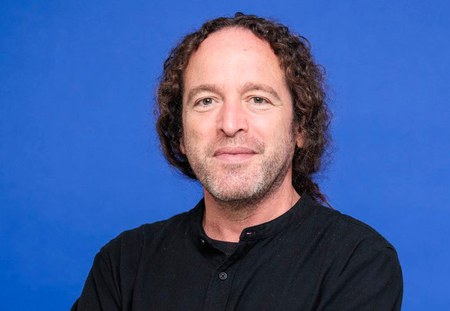
Brian Katz
Brian F.G. Katz is a CNRS Research Director at the Sorbonne Université/CNRS Institute d'Alembert and coordinator of the Sound & Space research theme. His fields of interest include spatial 3D audio rendering and perception, room acoustics, binaural audio, and virtual reality. With a background in physics and philosophy, he obtained his Ph.D. in Acoustics from Penn State in 1998 and his HDR in Engineering Sciences from UPMC in 2011. Before joining CNRS, he worked for various acoustic consulting firms, including Artec Consultants Inc., ARUP & Partners, and Kahle Acoustics. He has also worked at LIMSI-CNRS and IRCAM. Katz is the coordinator of the EVAA (Experimental Virtual Archaeological-Acoustics) initiative, an umbrella framework for heritage acoustics research spanning acoustic digital twins, virtual reality, and archaeoacoustics. His work on the acoustics of the Cathédrale Notre-Dame de Paris, including pre-fire measurements and subsequent historical reconstructions, has been widely covered in the scientific and general press. He has led or co-led several major funded projects in this area, including the ANR PHEND project and the EU JPI Cultural Heritage PHE project. He is an elected Fellow of the Acoustical Society of America, has served as Associate Editor for the Journal of the Acoustical Society of America and Acta Acustica, and was co-chair of the AES Technical Committee on Interactive Media & Games. As of October 2026, he serves as Editor-in-Chief of the Journal of the Audio Engineering Society.