

Reservations
The CIRMMT welcomes: Quasar — Electro Series concert is free and open to the public by reserving tickets online via this MS Form.
For CIRMMT students wishing to have their attendance tracked for awards eligibility, please ensure to reserve your own seat.
We invite you to share this event on Facebook.
Fiery Encounters XXIII roundtable
Location: A832 (8 floor), Elizabeth Wirth Music Building, 527 Sherbrooke O
Time: 6:30–7:10pm
Hosted by Quentin Lauvray with guests Chantale Laplante, Louis Dufort, Andrea Gozzi, Jean Piché, and Lily Koslow.
The Fiery Encounters are presented in the form of roundtable discussions and address essential issues that are rarely addressed in the world of new music. Usually presented as pre-concert events during Quasar's Montreal Series events, the Fiery Encounters bring together a host of surprising and daring guests who are ready to engage in uncompromising debate.
Program
Alithéa Ripoll: COCKS IN HELL, DEMOISELLES - Débugue-toi, lady ! (2026, Canadian premiere)
For saxophone quartet and electronics with spatialization (loudspeakers and bone conduction headphones). Duration: 15'
"Isn't she cute!" Under this pretext, can we touch her? NO! Whether it is a ladybug or a woman. STOP!
The provocative title is drawn from the nursery rhyme Coccinelle demoiselle (Ladybug, Ladybug), playing on a certain homophony. The piece addresses, in order: aggression, the resulting trauma, the potential response through self-defense techniques, and the desired release of tension. It also tackles the vigilance required in a world where women's rights are dismantled faster than they could ever be consolidated. Consequently, the transition from childhood to adulthood can sometimes feel aggressive, even violent.
Various technological tools are employed: Motion Capture, a loudspeaker dome, and bone conduction headphones (mixed spatialization). Together, these allow for the most immersive and individual experience possible. Furthermore, within an interdisciplinary framework, the saxophone quartet (Quasar) blends self-defence techniques with music.
Corie Rose Soumah: the flower of having passed through paradise in a dream (2026, Canadian premiere)
For saxophone quartet, melodicas and electronics sonically. Duration: 16'
The flower of having passed through paradise in a dream for saxophone quartet, melodicas and electronics sonically sets fourteen tableaux inspired by the poetry of Oregon-based poet Emily Carr, delving as well into José Esteban Muñoz's philosophical approach of ephemerality through queer temporalities. The piece combines epithets and glistering realities of various temporal orders where past, present, future and sonic artifacts melt together through fragmented units.
Oliver Schneller: Saqua - into the Deep (2025/26, Canadian premiere)
For saxophone quartet and multichannel audio. Duration: 13.5'
The idea behind this project with QUASAR is based on relating instrumental sound, produced by the saxophone quartet, and processed field recordings in a controlled virtual acoustic architecture. I have chosen a selection of sounds recorded in various oceans of the world, as well as more unusual aquatic scenarios (hydrophone recordings of marine animals, close-range tremors, recorded underwater with a geophone, responsse of metallic objects to changing currents and excitation patterns).
The piece constructs an immersive sound space, in which the performative actions of the musicians trigger spatial-acoustic reactions around them - acoustic responses within the electroacoustically extended space. Over time, a rippling, textured resonance-space evolves from the impulses of the musicians, locating them in an increasingly complex acoustic “biotope”, which may or may not be concretely evocative of the remarkable sound space found in our oceans. Underwater, sound travels much faster, is filtered differently, and has vastly different directivity patterns than in air. My aim is to somewhat re-create this phenomenon in a performance space, and derive compositional syntax and form in the process.
I would like to add a note on personal motivation: over the past decade, I been sailing across and scuba diving in different oceans and water bodies, always recording a broad array of sounds. Water has always played an essential role in my work, world view and in my life, but in the past years, I have increasingly focussed on the ecological and biological provenance of living sound in water. Marine bio-acoustics has become a primary interest of mine, searching for ways to integrate the findings into my compositional process.
Gordon Fitzell: liminal spaces : a study in five acts (2026)
For saxophone quartet, immersive audio, synchronized video and found objects. Duration: 14'
Liminal spaces: a study in five acts (2026) is a mixed media work featuring saxophone quartet, immersive audio, synchronized video, and an array of found objects. The objects—walkie-talkies, a music box, an incandescent work light, and a rotary-dial telephone—are all iconic “retro” devices from the twentieth century and are intended to evoke a sense of nostalgia often associated with liminal spaces.
Liminality refers to the ambiguous "betwixt and between," a transitional state that exists on the threshold between two different stages, conditions, or spaces. Beyond this general meaning, the concept of liminality has expanded to include the internet-born aesthetic wherein empty or abandoned places are not only ambiguous and transitional, but also eerie, forlorn, surreal, and nostalgic. In blending the four saxophones with old and new technology, I seek to express broad notions of liminality and the emotional states associated with it.
The work comprises five movements, each exploring a different manifestation of liminality through sound and image—airports, malls, hospitals, parking lots, and the concept of heterotopia (distinct, parallel spaces that function as “worlds within worlds”).
Biographies
Gordon Fitzell
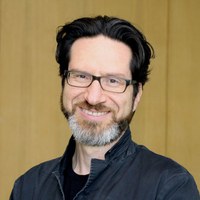
Gordon Fitzell (he/him) is a Canadian composer, improviser, and sound artist whose work—described as “eerie, throbbing and trancelike” by The New York Times—explores unexpected intersections between classical and popular cultures across acoustic, electroacoustic, and interdisciplinary contexts. He has collaborated with international ensembles including BIT20 Ensemble, eighth blackbird, ensemble mosaik, Ensemble Orchestral Contemporain, PianOrquestra, as well as Canada’s ECM+, Ensemble Paramirabo, Standing Wave, Aventa Ensemble, and Trio Fibonacci.
His music has been conducted by Robert Aitken, Daniel Kawka, Véronique Lacroix, Reinbert de Leeuw, and Bramwell Tovey, and performed at major festivals such as Darmstadt, Huddersfield, Pan Music Festival, Tanglewood, and the Winnipeg New Music Festival. His works appear on GRAMMY‑winning, Opus Award‑winning, JUNO‑nominated, and WCMA‑nominated albums.
Fitzell is an associate composer of the Canadian Music Centre, professor of composition at the University of Manitoba’s Desautels Faculty of Music, director of the eXperimental Improv Ensemble, and co‑artistic director of Groundswell.
Alithéa Ripoll

After completing a Master’s degree in composition at the Conservatoire de Liège, Alithéa Ripoll (she/her) taught there as an assistant before pausing her teaching activities — including her role as pedagogical coordinator at the Centre d’Art Vocal et de Musique Ancienne de Namur — to pursue a doctorate in composition and sound creation under the supervision of Ana Sokolović at the Université de Montréal. She also became a programming assistant for Le Vivier Group.
Driven by interdisciplinarity, she develops a range of projects in collaboration with many artists. More than sixty of her works have been performed by ensembles such as Musiques Nouvelles, Laps, Hopper, Paramirabo, Sepia, the Spilliaert Trio, Fractales, Sixtrum, and the NEM, as well as by various extra-musical artists.
Her music is regularly featured at festivals in Belgium and internationally (the Netherlands, France, Czech Republic, Poland, Spain, Chile, Québec). In 2021, she received a study grant from UdeM and a creation grant from the Fédération Wallonie-Bruxelles for Rencontre sous notre Lune.
Corie Rose Soumah
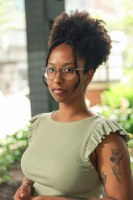
Corie Rose Soumah (she/her) is a Canadian composer (QC) based in New York. Her work explores fractured and reconstructed sonic materials through hyper‑collages and visceral physical gestures. Rooted in an interest in afrodiasporic geologies, her practice weaves together multiple aesthetic and sonic lineages using layered acoustic media alongside electronic and analog technologies.
She is the recipient of several honors, including the 2025 Prix de composition (Prix d’Europe) and multiple awards from the SOCAN Foundation. Her music has been performed by ensembles such as the International Contemporary Ensemble, Bozzini Quartet, Ensemble Itinéraire, Longleash, Hypercube, Ekmeles, Paramirabo, Sixtrum, Contemporary Insight, New Music Concerts, and Wet Ink, and featured at the Darmstadt Summer Course, TIME:SPANS, Gaudeamus, MaerzMusik, the Fondation des États-Unis in Fontainebleau, Festival Musica, MATA Festival, Salle Bourgie, among others.
Recent and upcoming projects include commissions for ICE, Elaine Mitchener, Quasar, and the Bozzini Quartet.
Oliver Schneller
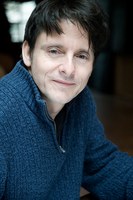
Oliver Schneller (he/him) (b. 1966, Cologne) studied composition at the New England Conservatory and Columbia University, completing his doctorate with Tristan Murail in 2002. From 2002–2004, he was a compositeur en recherche at IRCAM in Paris. His work centers on integrating instruments, architectural space, and live computer processing, often using spatialized setups with distributed loudspeakers.
Also active as a classical and jazz saxophonist, he has performed with the George Russell Bigband, John Zorn, Tan Dun, the Tanglewood Symphony Orchestra, and the Gustav Mahler Youth Symphony under Seiji Ozawa.
Recipient of the Rome Prize, the 2010 Siemens Composition Prize, and the Edgar-Varèse Guest Professorship, his music has been featured at major festivals by ensembles such as Ensemble Intercontemporain, Ensemble Modern, musikFabrik, and the Orchestre National de France. He is Professor of Composition at the Robert Schumann Conservatory in Düsseldorf and founder of the SoundCube laboratory.
Quasar saxophone quartet
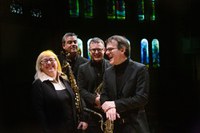
Renowned for their energy, unique sonority, and fearless innovation, Quasar has been exploring the many facets of musical creation since its founding in 1994. A highly versatile ensemble, they excel across a wide range of genres and aesthetics—from acoustic works and improvisation to cutting‑edge electronics, music‑theatre, and multidisciplinary performances.
Their artistic excellence has earned them 11 OPUS Awards from the Conseil québécois de la musique, including the prestigious Artist of the Year, affirming their place among Canada’s most influential contemporary music ensembles.
A driving force in new music, Quasar is celebrated for its close collaborations with today’s composers. Through research, experimentation, and bold creative risk‑taking, the quartet has commissioned and premiered over 200 works, contributing significantly to the evolution of contemporary repertoire.
Based in Montréal, Quasar presents its own concert series and performs across Canada, the United States, Mexico, and Europe, with appearances at major festivals including Busan Maru, Ars Musica, SALT, and Tonlagen.
Acknowledgements
The partners for this event include: